What it is
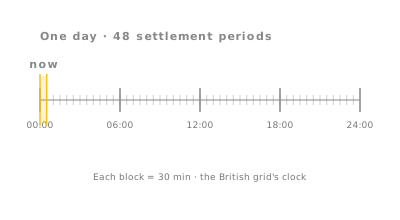
A settlement period is a thirty-minute block of clock time, starting on the hour or half-hour, in which the British electricity market accounts for everything that flowed across the grid. Period 1 starts at 00:00 local time (so 00:00 GMT in winter, 00:00 BST in summer), period 2 at 00:30, and so on. A normal day has 48 periods. On the spring-forward clock change there are 46 (the local hour 01:00–02:00 is skipped) and on the autumn-back change there are 50 (the hour repeats).
Every contract in the wholesale market — every generator's output, every supplier's drawn demand, every interconnector flow — is invoiced against the period in which it happened.
Why thirty minutes
The half-hour cadence has been in place since the market opened in 1990. Shorter periods (5 minutes, 15 minutes) give finer price signals but cost more to administer; longer ones (an hour) hide the swings that matter for managing the grid. Europe is gradually moving towards 15-minute periods, and Britain has consulted on doing the same, but the change is years away.
In the meantime, nearly everything the British electricity industry measures is per settlement period. Wholesale prices, carbon intensity, NESO's "demand met" figure — they all settle on the half-hour.
How it shows up on the dashboard
A few places:
- The header shows the current period in the form
period 14:30–15:00. It rolls over on the half-hour even when the data hasn't refreshed, so you can see which window you're inside. - The price card updates 10 to 25 minutes into each period, because that's when Elexon publishes the period's Market Index Price. Until then it shows the last known print, flagged as awaiting.
- The carbon card lags 30 to 60 minutes for the actual (settled) value, because the carbon mix is calculated after the period closes. The forecast number is available immediately.
- The generation mix and demand update faster, every 5 minutes inside the current period, using Elexon's sub-period FUELINST feed and NESO's near-real-time demand publication.
In Firestore, every settlement period gets its own document keyed by the period's start time in unix milliseconds. Most of the historical chart data lives there.
Why it matters
A dashboard that shows you live grid data needs to align everything it pulls against the same clock. Without a shared cadence, the carbon number, the price number, and the fuel mix would each tick on slightly different rhythms and the totals would never agree. Aligning to the grid's own clock is the only way the totals add up.
Further reading
- Elexon BMRS — Britain's market data portal; every settlement period's actuals land here first.
- BSC: How settlement works — the formal Balancing and Settlement Code documents, for when you want the rules of the game.
- Wikipedia on the British Electricity Trading and Transmission Arrangements — context on why the market looks the way it does.